Last updated
Taghazout Surf Guide: Best Wave Breaks
By MatnWave
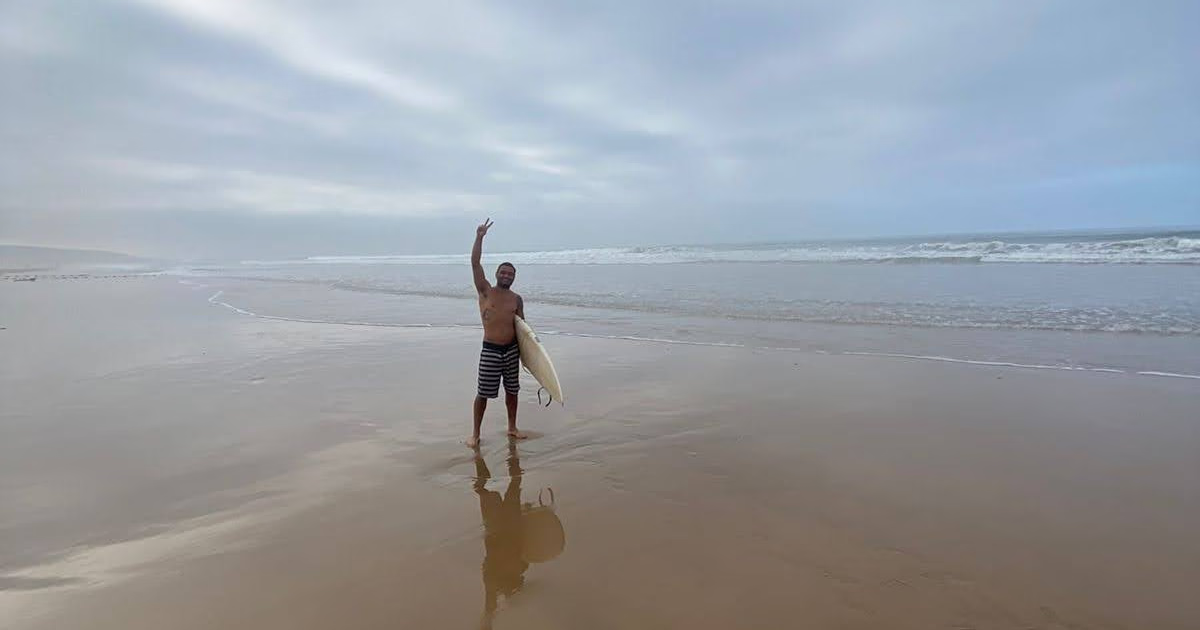
If you are planning your next Atlantic surf block, Taghazout, Morocco belongs in the conversation. The village sits between the Atlas Mountains and the open ocean—raw nature, warm hospitality, and enough named breaks nearby that coaches can match conditions to your level instead of forcing a single spot.
What follows is the working guide we hand to first-time visitors: the spots, the seasons, where to stay, what to pack, and how to behave in the lineup—with links into MatnWave cohort weeks when you want the full operational detail.
A Taghazout surf trip is a forecast-led stay on Morocco’s Atlantic coast where several point, reef and beach options sit within the same driving corridor. The advantage is not a guaranteed famous wave; it is the ability to choose a break that matches the day’s swell, wind, tide and surfer level.
By the numbers — Taghazout surf planning
| Stat | Value |
|---|---|
| Atlantic coastline (Taghazout–Agadir corridor) | ~11.2 km of accessible surf |
| Named point and beach breaks within 20 min | 6+ primary spots |
| Surfable days per year (regional average) | 300+ |
| Flight time Paris → Agadir (AGA) | ~4.2 hours direct |
| Year-round water temperature | 17–22 °C |
Sources: Surfline — Morocco; WeatherSpark — Agadir.
Why Taghazout stays on surf travel shortlists
- Swell exposure: North-west Atlantic energy shows up consistently across much of the year, with seasonal shifts in size and period.
- Break density: Many quality waves sit within a short drive—less transit, more reps.
- Climate: Mild air temperatures and manageable water temps for much of the year (wetsuit thickness still matters—see packing).
- Culture: Surf life here grew beside the village rather than replacing it—cafés, souks, and coastal walking routes still feel lived-in.
Best-known surf spots (planning names, not promises)
Conditions decide the day. Still, these names are what travelers and coaches use to coordinate:
Anchor Point
Morocco’s signature right-hand point. When a long-period swell hits, sections can link for hundreds of metres. Skill: intermediate to advanced on bigger days; beginners should not paddle out alone here. Best tide: mid to rising often works; check local knowledge. Wind: morning offshore is common before trades turn.
Hash Point
Village-adjacent reef and point mix—often mellower than Anchor when size is moderate. Skill: all levels with coach supervision. Best season: year-round with swell dependency.
Panoramas
Sandy-bottom friendliness for lessons and progression; a common camp default when coaching mixed levels. Skill: beginner to intermediate. Crowd: busier in peak weeks—earlier sessions help.
Killer Point
Powerful, fast reef when it turns on. Skill: advanced only. Not a casual first paddle. Coaches only stage here when the group has disclosed ability honestly.
Devil’s Rock & Boilers
Named breaks north and south of the village core—worth knowing for forecast conversations even if your week never lands there.
Imsouane (day trip)
Famous long right-hand rides ~90 minutes north. Skill: intermediate+ for the main point. MatnWave may run select missions when swell, tide, and van bandwidth align. Compare hubs in Taghazout vs Imsouane for BJJ surfers.
If you want surf paired with structured BJJ in one weekly rhythm, read Surf and BJJ in Taghazout—then check Camp weeks for live dates.
Taghazout vs other Moroccan surf hubs
| Hub | Wave character | Crowd density | BJJ access | Drive from Taghazout camp |
|---|---|---|---|---|
| Taghazout | Multiple points + beaches | Moderate–high in peak | Daily at MatnWave cohorts | — |
| Imsouane | Long right point | High on perfect days | Day-trip only | ~90 min |
| Tamraght | Beach / mellow reef | Lower than Taghazout village | Gyms in Agadir corridor | ~10 min |
| Essaouira | Wind / onshore bias | Tourist + kite crossover | Limited mat scene | ~3 h |
Seasons: what “peak” actually means
- October–March (winter swell window): Often the largest, most organized swell periods—attractive for experienced surfers who can handle paddle demand and lineup patience. Average wave heights in this window often run 1–3 metres on the best banks (Surfline regional data).
- Spring and fall: Frequently a balance of consistency and lighter crowds—good default for many first Morocco trips.
- Summer: Smaller, gentler surf on many banks—friendly for learning and exploration; still respect sun and shorebreak.
Seasonal cohorts on our side of the house map to real ocean behavior—see Winter Escape and Fall Vibes when those sessions are listed.
Where to stay: surf camp versus independent lodging
Surf camps bundle coaching, gear, meals, and daily transport to the best available conditions—strong when you want decisions made by people who read the forecast every morning. MatnWave’s overview lives on Surf camp Taghazout; availability flows through Book.
Guesthouses and rentals trade flexibility for logistics—you manage boards, tides, and transport. That can be perfect for advanced surfers; it is heavier cognitive load for first-timers.
Surf, recovery, and training load
If you are also training BJJ during the same week, treat shoulders, neck, and grip as shared resources. Heavy paddle days should inform how you enter sparring—this is not “toughness,” it is training hygiene. Our surf-plus-grappling framing: BJJ surf camp.
Food: fuel without theatrics
Taghazout and the surrounding villages offer tagines, fresh bread, amlou, mint tea, and beach cafés with ocean light. Eat consistently; dehydration shows up first in poor decisions—on the wave and on the mat.
Rest days: what surrounds Taghazout
Flat spells and scheduled rest days are not wasted here. Most travelers explore Paradise Valley—palm-lined rock pools roughly 40 minutes inland—head into Agadir for markets and coastal context, or walk the ridge trails above the village for open Atlantic views. The surf culture predates influencer branding: local surfers, instructors, and long-term residents share the same cafés, board-repair corners, and sunset viewpoints, so the pace stays slow and grounded. That variety is what makes a full week worthwhile rather than a quick strike mission.
Packing list (practical, 2026)
- Wetsuits: 3/2 mm is common for cooler months; shorty or thinner rubber when summer banks are small and the air is hot.
- Sun: reef-safe sunscreen, lip protection, and a hat for non-surf hours.
- Boards: confirm with your operator before you fly—rental fleets vary.
- Small repair: spare leash, fin key, wax suited to cool water if you bring your own stick.
- Travel: pack light; laundry and salt mean you will wear the same staples on rotation.
First-timer etiquette and logistics
- Carry cash—not every café or small shop runs cards.
- Respect local dress norms in town; the beach is not the village center.
- SIM cards are inexpensive; coverage is generally solid along the main coastal strip.
- If you are unsure, surf with a guide—reef breaks punish guesses.
How to read the morning forecast
Start with swell direction and period, then look at wind and tide for the actual session window. A height number on its own is incomplete: long-period energy can make a modest forecast feel powerful on an exposed point, while a protected beach may remain manageable. Local bathymetry and crowd movement add another layer that a regional model cannot fully resolve.
For a mixed-level group, the “best” break is the one that produces safe, coachable repetitions for the people in the van. That may mean whitewater and soft reforms for beginners while experienced surfers rotate to an outside bank with another coach. If wind arrives early, moving the departure or shortening water time can protect the later training block.
Use at least two forecast views and ask a local coach to interpret them. Record what actually happened: tide, board, crowd, fatigue and where the forecast differed from the water. After several days, that log is more useful than chasing a spot name.
Safety boundaries worth deciding in advance
Agree on a meeting point, exit landmark and maximum session time before anyone paddles out. On reef or point breaks, identify the entry and exit separately; they may not be interchangeable as the tide changes. Beginners should understand that “all levels” does not mean every break is available to every surfer.
If visibility, current, crowding or fatigue makes communication unreliable, the session should move or stop. A missed surf block is cheaper than an injury that ends the entire week. For BJJ practitioners, protect the neck and shoulders early: small paddle strains compound quickly once framing, gripping and sparring begin.
Authoritative forecast references (external)
Cross-check period, direction, and wind—forecasts are models, not guarantees:
- Surfline — Morocco region overview
- WeatherSpark — Agadir seasonal weather averages (proxy context for the Taghazout–Agadir corridor)
- World Bank — Morocco international tourism arrivals (macro travel-volume context, not a surf guarantee)
What to do next on matnwave.com
- The complete guide to BJJ surf camps in Morocco — logistics, cohort size, and comparison checklist.
- Camp weeks — live sessions and availability context.
- Prices — training-only versus full-stay framing.
- FAQ — deposits, belts, and surf disclosure.
- Book — apply when a cohort is open.
- About — team and how weeks are run. Gallery — what weeks look like on the ground. MatnWave home.
Taghazout is not a single wave—it is a week-long relationship with the Atlantic. Build your plan around honest skill disclosure, seasonal reality, and recovery, and the lineup will still be there tomorrow.
Sources and verification
External context was checked against the primary or specialist sources below. Verify live MatnWave prices, cohort sizes and schedules on the linked commercial pages before booking.
Frequently asked questions
When is the best time to surf Taghazout?
October through March often brings larger, more organized swell for experienced surfers; spring and fall balance consistency and crowds; summer tends toward smaller, gentler surf for learning. Always read the regional forecast for your exact week—not a generic month label.
What surf spots are near Taghazout?
Well-known names include Anchor Point, Hash Point, Panoramas, Killer Point, and day-trip options such as Imsouane. Coaches pick breaks daily from swell, wind, and group level.
Do I need a car in Taghazout?
Not always. Surf camps provide daily transport to conditions; independent travelers may rent a car or use local transfers. Cash still matters for small cafés and services.
How do I combine surf with BJJ in Morocco?
Book a structured cohort that sequences surf blocks with BJJ instruction and recovery. MatnWave outlines the mixed format on the BJJ surf camp page and in the complete Morocco guide on this journal.
Where are authoritative surf forecasts for Morocco?
Use regional forecast tools such as Surfline’s Morocco overview and cross-check wind and period. Climate context for Agadir and Taghazout is documented by sources such as WeatherSpark’s seasonal averages.
Related articles
surf
Surf & BJJ in Taghazout Morocco Guide
Surf and Brazilian Jiu-Jitsu in Taghazout, Morocco—cohort weeks, Atlantic sessions, technical BJJ, and why movement-led travel works here.
morocco
BJJ Surf Camp in Morocco: 2026 Guide
Compare MatnWave BJJ surf camps in Morocco: twelve practitioners max, daily surf and jiu-jitsu, live formats, prices and booking steps.
surf
Taghazout vs Imsouane for BJJ Surfers
Taghazout vs Imsouane for BJJ surfers: compare waves, drive time, daily mat access and when each Morocco Atlantic hub fits your week.